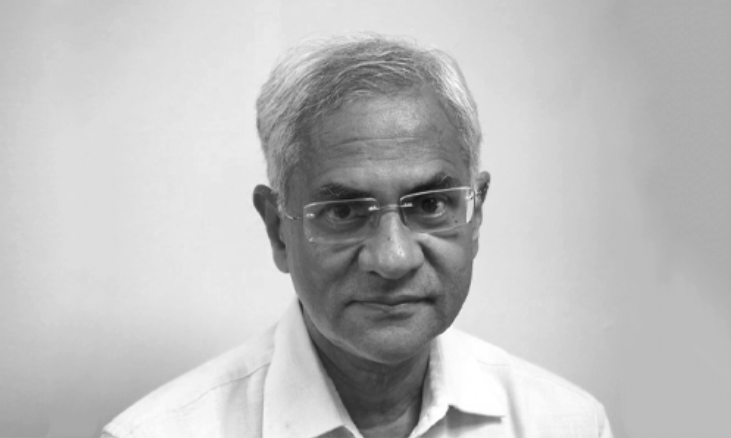
When Keshav Desiraju was appointed Union Health Secretary in 2013, a colleague, Jo Chopra-McGowan, wrote: "We got lucky yesterday. And by 'we', I mean the country." It's not something people often say about bureaucrats, because Mr Desiraju was not most bureaucrats.
From the Hills to Delhi
Born in 1955, he was Cambridge-educated, Harvard-trained and could have gone anywhere. He chose the IAS and spent his early years in the districts of Uttarakhand and Uttar Pradesh, building healthcare systems in some of India's most underserved terrain. He was enormously admired in Uttarakhand, where he served with distinction at both the district and Secretariat levels. Those who worked alongside him in the state remember him as a father figure of goodness, grace, and genuine concern for the disadvantaged
He was a driving force behind the launch of Uttarakhand's 108 emergency ambulance service in 2008, free, 24/7, and life-changing for communities with no other options. Those years on the ground shaped everything that followed: a belief that good governance, done quietly, could change lives.
The Act That Changed Everything
When Mr Desiraju moved to the Union Ministry of Health as Additional Secretary, his focus sharpened quickly. It was during his stint as additional secretary that gutka and other chewable tobacco products were banned; the bans were instituted by states, but it was his letter that set the ball rolling.
But the work he chose to pour himself into most fully was mental health, then one of the most neglected corners of Indian public policy. India had no national policy, no rights framework, and a law dating back to 1987. He set about changing all three.
Starting in 2010, he held extensive consultations with psychiatrists, disability-rights activists, caregivers, and people with lived experience of mental illness. A national consultation filled a 365-seat auditorium. Three drafts were released for public comment between 2011 and 2013. It is said that he personally drafted significant portions of the Bill, including the landmark advance directive provision, giving individuals the right to specify their own care before a mental health crisis hits.
On 30 March 2017, the Mental Healthcare Act was passed unanimously in Parliament. The British Journal of Psychiatry called it visionary. Vikram Patel called it one of the most progressive mental health laws in the world. When the Supreme Court cited the Mental Healthcare Act in the landmark Navtej Singh Johar vs Union of India case, it used its non-discrimination provisions to help argue for reading down Section 377, effectively contributing to the decriminalisation of homosexuality in India. Legislation designed for one purpose had quietly reshaped another.
His Legacy Lives On
Keshav Desiraju passed away on 5 September 2021, aged 66.
In his honour, the Centre for Mental Health Law & Policy presents the Keshav Desiraju Memorial Award for Outstanding Public Service in Mental Health every year on 11 May, his birthday. It recognises government servants who embody his values: advancing rights-based mental healthcare in India, one policy, one district, one decision at a time.
Past recipients include Ajay Chauhan, Gujarat's state mental health nodal officer, and Dr Shekhar Seshadri, recognised for exceptional contributions to child and adolescent mental health. The award isn't just a commemoration. It's also a challenge to find the next Keshav Desiraju working quietly within the system, and make sure they know the country is watching.